

Empower Your Cancer Journey with Insights and Hope
Hope For Cancer isn't just a book—it's a lifeline for those navigating the complex path of cancer treatment and survivorship. If you, or a loved one, has been tagged with a cancer diagnosis, this book will be the perfect companion through your journey.
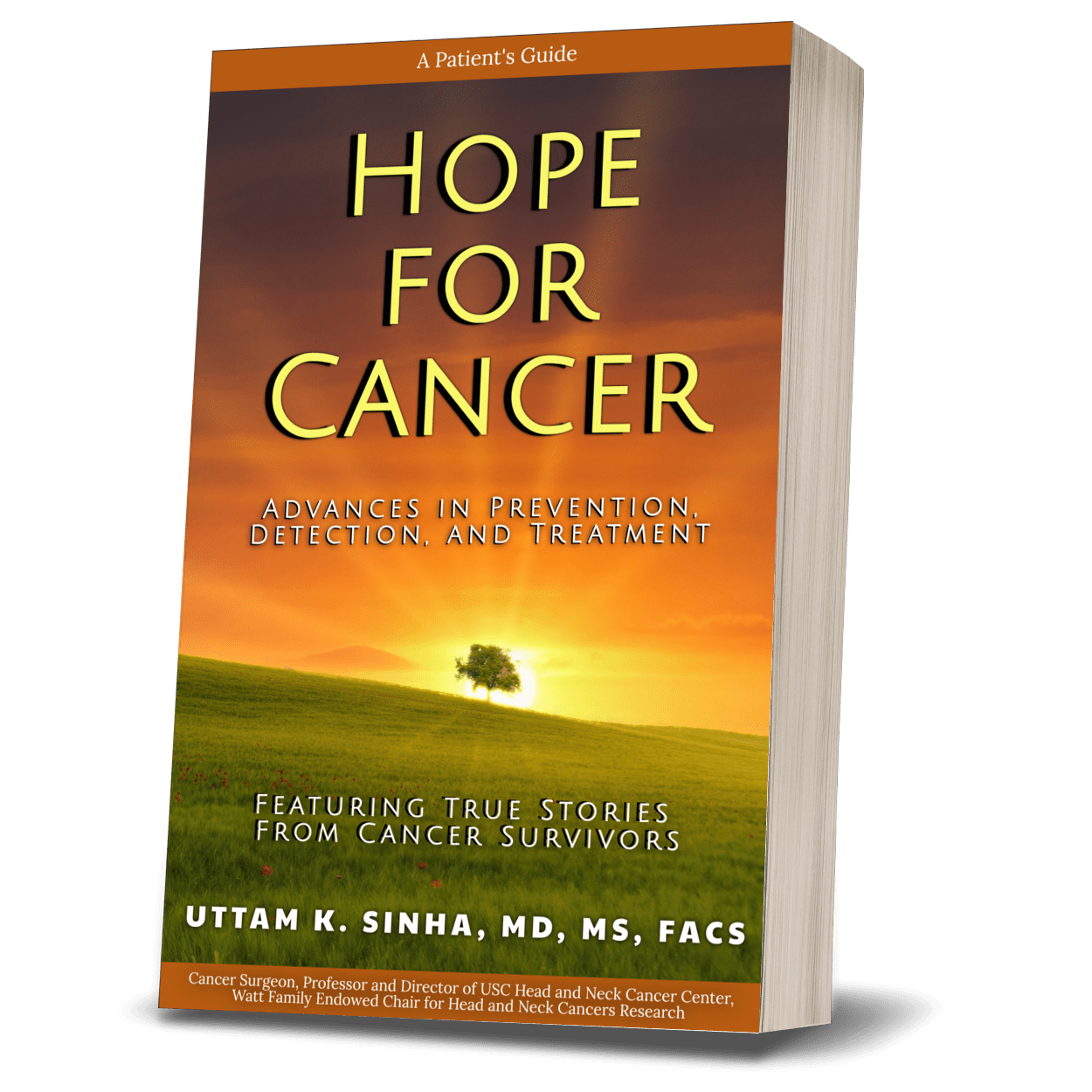
Coming in 2026
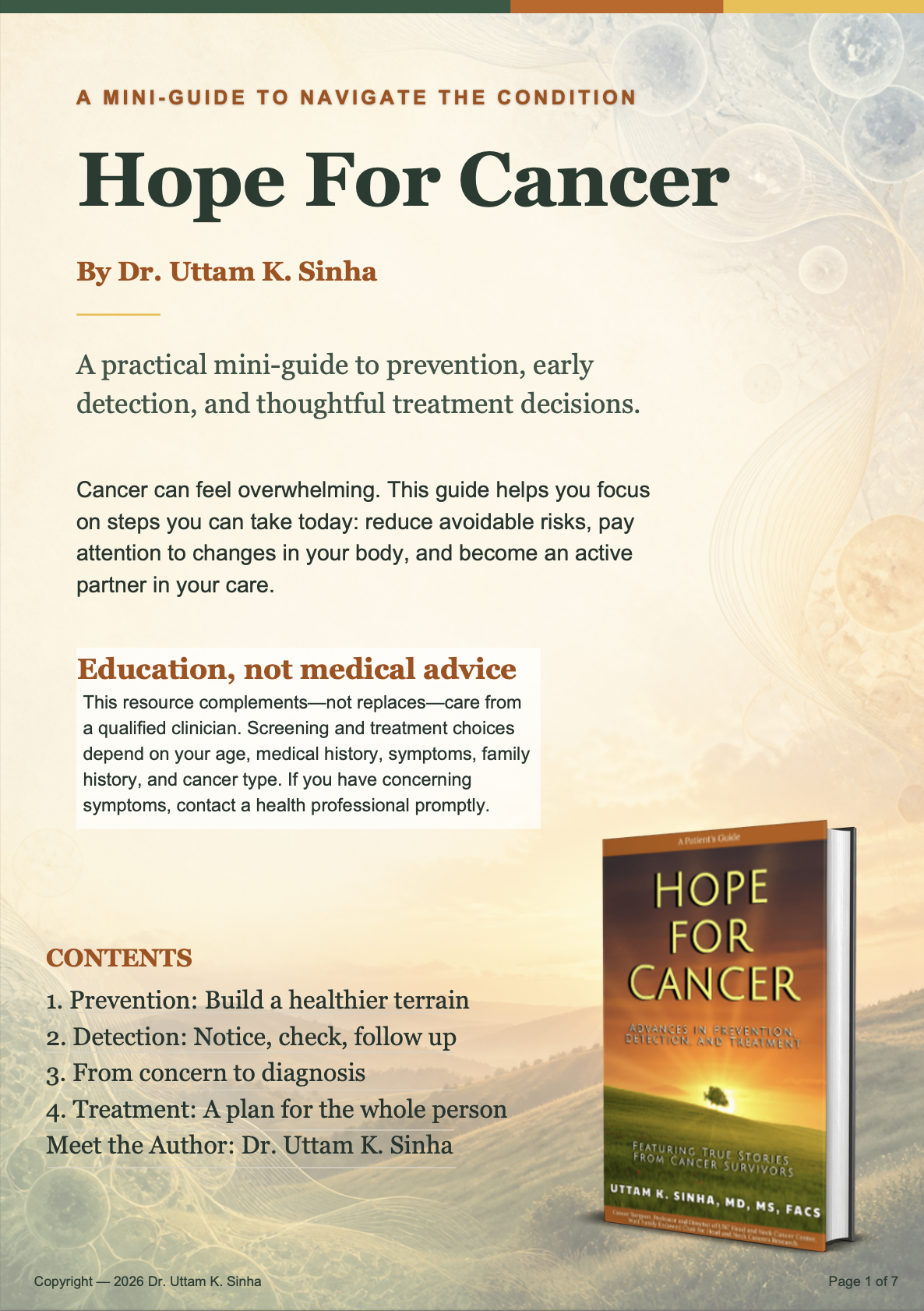
Meet the Author:
Dr. Uttam K. Sinha
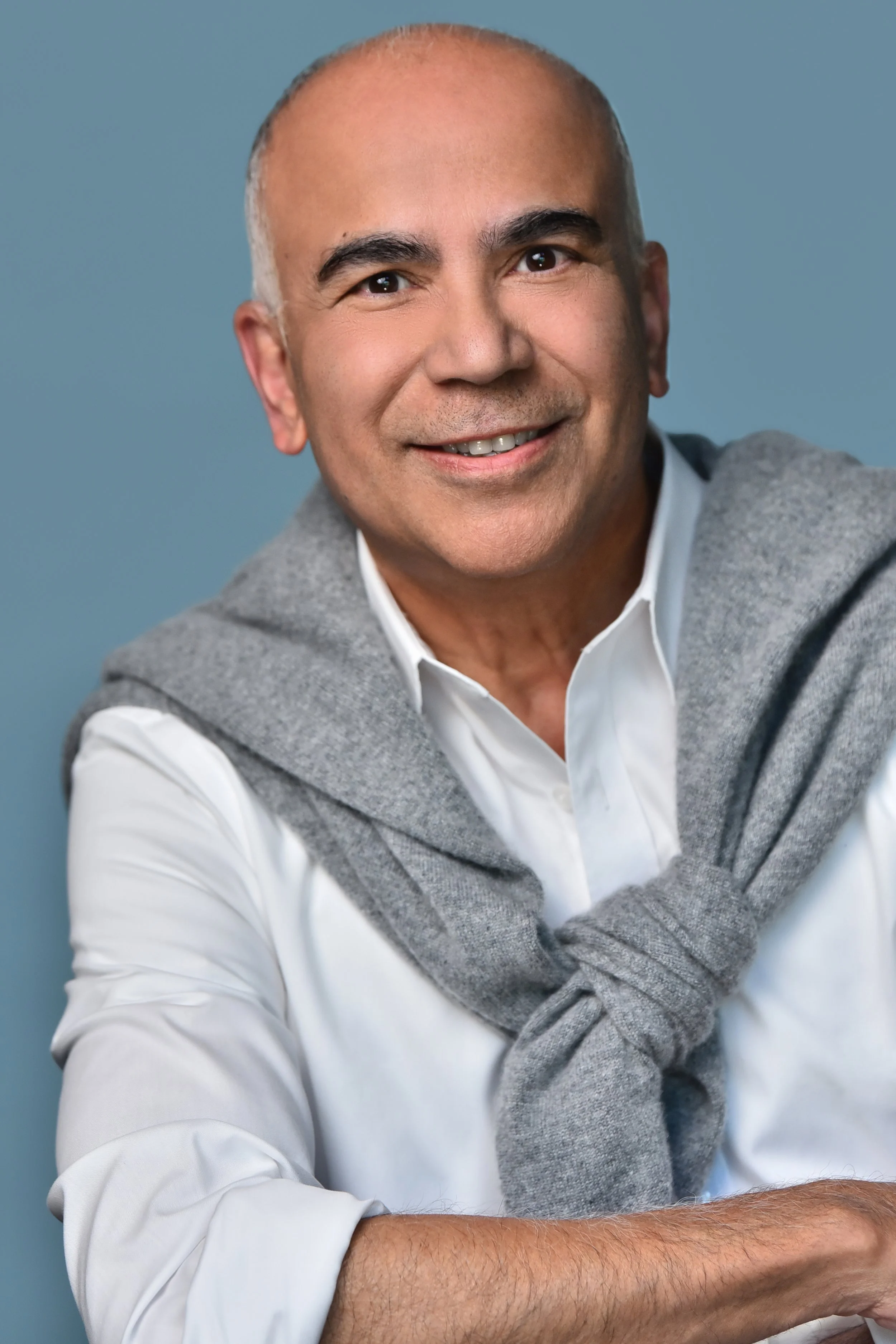
Growing up in a small town in India, Uttam K. Sinha, MD, MS, FACS witnessed the profound suffering caused by untreated head and neck tumors. Those early experiences ignited a lifelong mission to transform cancer care—a journey that led him from Calcutta University to the University of Southern California (USC) and advanced fellowships in New York and France.
Today, Dr. Sinha, is a world-renowned head and neck cancer surgeon and a leading authority in the field of oncology. He serves as Professor and Director of the USC Head and Neck Center and holds the prestigious Watt Family Endowed Chair in Head and Neck Cancer Research at the Keck School of Medicine of USC. A pioneer in translational medicine, Dr. Sinha is at the forefront of early cancer detection, having received the Technology Commercialization Award from the USC Stevens Center for Innovation for his groundbreaking saliva-based diagnostic test. He also introduced a novel treatment for rehabilitation of swallowing using neuromuscular electrical stimulation and is considered a pioneer in reconstructive and robotic surgery to improve patient outcomes.
Having published numerous studies, Dr. Sinha’s research spans the mechanisms of metastasis, speech and swallowing rehabilitation, and the use of real-time MRI. To further the research endeavors, Dr. Sinha has established collaboration with multiple national and international institutes from England, France, India, China and Mexico.
Beyond the operating room, Dr. Sinha’s core focus remains the “whole patient” and their quality of life. This dedication to the human element of medicine led him to launch HNC Support International, a global survivorship program. He has also been consistently recognized as a “Top Doctor” by Castle Connolly and the Los Angeles Business Journal. His career is defined by an integrative, multidisciplinary approach to healing, and his new book, Hope for Cancer, reflects his life’s work: combining world-class innovation with compassion, and the enduring hope of cancer prevention, detection and recovery.
Medical Director of USC Head and Neck Center
Professor of Otolaryngology--Head and Neck Surgery
Watt Family Endowed Chair for Head and Neck Cancers

Transform Your Cancer Experience
Hope For Cancer is your compassionate guide, providing holistic, evidence-based strategies to transform your journey to healing.
Integrate science-backed nutrition, movement, and stress management practices.
Learn about cutting-edge diagnostics, including liquid biopsies and saliva tests.
Navigate treatment options with clear, straightforward guidance.
Embrace survivorship techniques like swallowing and voice therapy.
Uncover myth-busting insights about alternative ‘cures’ for informed decision-making.

Who is This Book For?
Perfect for newly diagnosed patients seeking clarity and direction.
Ideal for survivors aiming to improve their quality of life post-treatment.
A must-read for caregivers dedicated to supporting their loved ones.
Beneficial for health-conscious readers interested in prevention and early detection.
Essential for clinicians embracing integrative, patient-centered care practices.
Invaluable for families longing for practical and emotional support throughout the cancer journey.
What’s Inside?
1. Understanding Your Diagnosis - Simplifying medical jargon for a clearer grasp of your condition.
2. Prevention and Early Detection - Tactics to proactively manage your health.
3. Treatment Options Explained - Comparing traditional methods and cutting-edge therapies.
4. Living and Thriving - Voice, speech, and swallowing therapies to enhance daily life.
5. Nutrition and Wellness - Crafting a diet and lifestyle that supports recovery.
6. Survivorship Planning - Transitioning from patient to empowered survivor.
7. Dispelling Myths - Separating fact from fiction.
8. What to Know about Chemo, Radiation and Surgery - The Goal: Improving the “Whole” You.
9. The New Normal - Read survivor stories that reflect a renewed zest for life!
And More!

FAQs
Hope For Cancer focuses not only on treatment but also on improving quality of life through a holistic, patient-centered approach.
What makes this book different from others on cancer care?
1
While many cancer stories are related to head and neck cancer, many strategies are applicable to other cancers and those interested in the latest in prevention, detection and treatment.
Is this book suitable for all cancer types?
2
It provides myth-busting insights backed by science to help you navigate misinformation. Still, I subscribe to “whole” health strategies to manage the mind, body and soul.
How does the book address alternative ‘cures’?
3
Yes, it offers detailed rehabilitation techniques for speech, swallowing, and overall well-being.
Can this book help with post-treatment recovery?
4
Is this book suitable for healthcare professionals?
5
Absolutely, it encourages integrative care practices beneficial for clinicians and trainees.
Cancer Survivors Speak Out
-
One thing about Dr. Sinha, he truly is Superman. He’s helped me through everything in my life. I’m blessed to know him and be his patient. I can tell you without hesitation that I’m glad I got throat cancer. My life has changed for the better. I’m such a better person.
Jim Franchino, Entrepreneur, Cancer Survivor
-
Dr. Sinha once told me, “Wade, you’re going to die someday, but it’s not going to be from this cancer.” Six years later, his words still anchor me.
Wade Chernick, Cancer Survivor
-
As of March 2025, it’s been 20 years of surviving, even thriving after cancer under Dr. Sinha's care. I still have my job, but travel less. There's life after cancer. In some ways, life is even better than before.
Joe Lapides, Cancer Survivor
-
USC’s team didn’t just treat my disease. They treated me. The whole me. Dr. Sinha. Dr. Brenda Villegas, my speech therapist. They understood what it meant to lose your voice—and what it takes to rebuild a life afterward.
Bill Brummel, Cancer Survivor, Filmmaker
-
I honestly believe Dr. Sinha saved my life. He didn’t just keep me alive–he gave me back my quality of life.
Jon Galiher, Cancer Survivor, Retired Fireman
-
Cancer took my voice. Then gave it back. But in between, it gave me something else: a new understanding of connection, of gratitude, of time. I don’t recommend this method. But I do recommend the lesson.
Sam Riegel, Cancer Survivor, Voice Actor